Dear Friend,
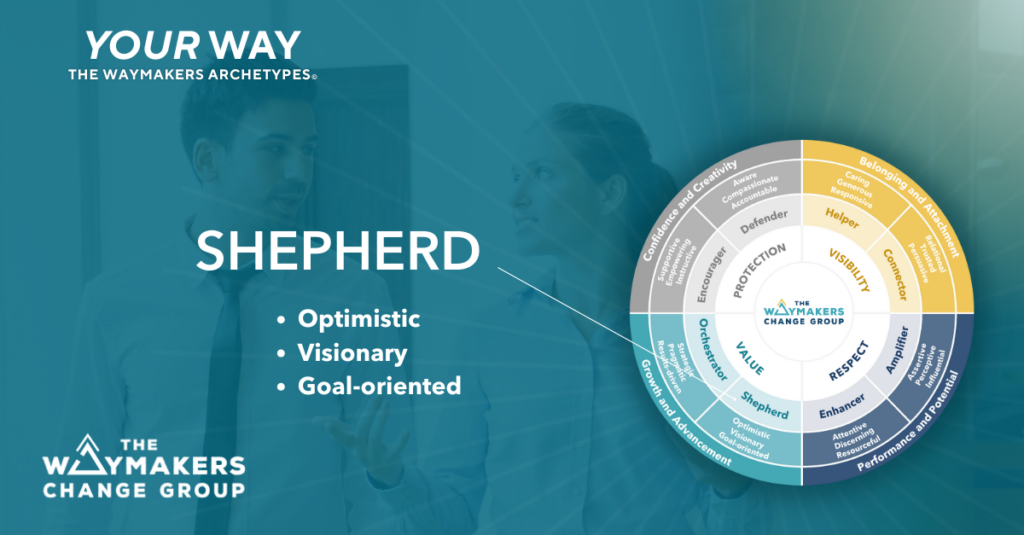
Recently, our newsletters have focused on the 8 archetypes within our Your Way leadership model. Today is no exception. Today, we’re focused on the SHEPHERD.
When thinking of the employee lifecycle, Shepherds are aligned closely with employee growth and advancement. They leverage their bird’s eye view of their organizations and their innate Waymaking skills to usher people toward their own professional high ground. Let’s take a closer look at the Shepherd.
Anatomy of the SHEPHERD Archetype
Why Shepherds matter
In the workplace, the Shepherd is a protector and guide who understands the corporate landscape and is intentional about leading people through it. They clarify the destination, discern what will be required to get there, and are mindful about minimizing reputational risk along the way. Shepherds not only show people how to climb toward their own professional mountaintop, they also help ensure people have the tools, air cover, and support needed to arrive successfully. Shepherds illuminate the distance between current state and future state and are passionate about closing the gap.
When Shepherds matter
The Shepherd is particularly effective when forward motion is critical, but the way is not yet defined. They see both shortcuts and roadblocks, and seamlessly clear paths through and around both. In uncertain times, including those with positive purposes like business transformation, Shepherds help usher people safely toward a destination, and have a gift for making even challenging trips feel enjoyable.
How to nurture your Shepherd instincts
- Use your knowledge and insight to help people align realistic goals to their vision, so they have a reasonable chance to achieve it.
- Do more than encourage people toward the greater good. Prepare and mobilize them by identifying success requirements and offering guidance along the way.
- Consider how to maximize opportunity for others while minimizing risk. Bold moves help people stand out from the crowd.
- When you see barriers to progress, work with others to overcome them. It’s often small obstructions that prevent people from achieving their goals.
Things to watch out for
- While you may see the way forward clearly, resist the urge to be too directive. Choose charting the course over dictating it.
- Ensure you understand others’ preferences before you begin shepherding them along. Respect people’s boundaries and wants.
- Pause to solicit input from your team members as often as possible, and fully leverage their expertise, even when the stakes are high. Shepherds tend to go too fast and may skip buy-in when pressure mounts.
- Remember that your ability to see around the corner is a gift. Not everyone has that. So don’t get frustrated when people can’t see what you see. Paint a picture for them and bring them along.
Without Shepherds, employees would feel lost. Careers would stagnate and employee growth, advancement, and retention would suffer. As leaders, we should all exhibit some qualities of the Shepherd to ensure our people and our businesses thrive. How will you lean into Shepherd qualities to help all people achieve the success they seek? What will you specifically look out for along the way?
If you’ve yet to do so, take our FREE, 12-question quiz to learn more about your natural way of leading. If you have taken our quiz, use your archetype insights to help make a way for ALL PEOPLE at work–naturally, effectively, and sustainably. And be sure to follow us on LinkedIn as we share more about the Waymaker Archetypes.
Until next time, when we take a closer look at the ORCHESTRATOR Waymaker archetype, keep making a way!
The Waymakers Change Group